
- Major ActivitiesMajor ActivitiesThe Northeast Asian History
Foundation is the center of
Northeast Asian history research - ResourcesResourcesThe Northeast Asian History
Foundation is the center of
Northeast Asian history research - NewsNewsThe Northeast Asian History
Foundation is the center of
Northeast Asian history research - IntroductionIntroductionThe Northeast Asian History
Foundation is the center of
Northeast Asian history research
-
Screen size
-

- Major Activities
- Resources
- News
- Introduction
- Website Guide
Resources
Publication
- Date 2010.07.14
- Hit 5711
1. All rights of the contents and the electronic files in the Webpage are reserved for the Northeast Asia History Foundation.
2. No part of the Webpage may be reproduced, stored in retrieval system, or transmitted, in any form or by any means, without the prior permission.
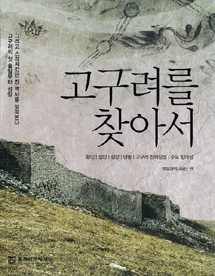
Title: In Search of Goguryeo
Northeast Asian History Foundation (Ed.)
Northeast Asian History Foundation ㅣ224 pagesㅣ12,000 wonㅣFebruary 16, 2009
ISBN 978-89-6187-078-8-03900
Field surveys are a form of travel, an exploration, and a process by which we can fully internalize the knowledge we have gained from books. Field surveys breathe life to the history we have learned via text and images. Field surveys would be all the more meaningful with a guidebook informing us of the historical origins and significance of what lie before us. That is why the Northeast Asian History Foundation decided to make a guidebook for travelers in search Goguryeo’s traces.
Eastern China, more familiarly known to the Korean people as “Manchuria,” is where Goguryeo was founded and the basis for its growth was built. After Goguryeo moved its capital to Pyeongyang, Goguryeo protected the area against Chinese dynasties and nomadic powers of the plains to safeguard its territorial integrity. Therefore, Manchuria is the ideal site to gain insight into Goguryeo’s beginning, growth, and fall. With the founding of Goguryeo, Jumong designated Huanren as the kingdom’s capital. Huanren retains traces of the history of early Goguryeo, which was rising as a major power in the region spanning the mid- to upper reaches of Amnok River. At Ji’an, Goguryeo’s second capital, the next 400 years of Goguryeo’s dynamic history came to pass.
There are so many historic sites in Huanren and Ji’an alone that travelers may feel pressed for time. In Search of Goguryeo introduces the major must-see sites in Huanren and Ji’an. Anecdotes related to the sites in historical records are introduced accompanied by their analysis, albeit brief. In addition to Huanren and Ji’an, there are many places bearing traces of Goguryeo in Manchuria. Shenyang and Dandong, which are considered major urban centers in China’s Northeast today, used to be the hub and crossroad for traffic between the Liao-he (Liao River) and Yellow Sea regions. Even without any caretakers, many mountain fortresses of Goguryeo still remain standing in the Liaodong peninsula. It is hoped that by seeing these fortresses, travelers come to a heartfelt understanding that Goguryeo had command over the largest territory in Korea’s history. The book includes maps and field survey routes. Therefore, it comes in handy for figuring out your location or the location of major historical sites. The book aims to help travelers make the most out of a trip in search of Goguryeo.
Table of Contents
Part 1 First trip to Goguryeo
• Huanren
1. Before the field survey
2. On the field survey: Traveling to Goguryeo’s first capital
• Ji’an
1. Before the field survey
2. On the field survey: Witnessing Goguryeo’s rich culture
• Shenyang
1. Before the field survey
2. On the field survey: Knocking on Goguryeo’s door
• Dandong
1. Before the field survey
2. On the field survey: Land and maritime crossroad to the continent
Part 2 In search of Goguryeo’s fortresses
• Goguryeo’s Cheolli Jangseong
1. Before the field survey
2. On the field survey: Goguryeo, the land of fortresses!
• Fortress for defending the capital
1. Before the field survey
2. On the field survey: In search of Goguryeo’s ironclad defense line
Album Fortress: Embodiment of the spirit of Goguryeo
