
- Major ActivitiesMajor ActivitiesThe Northeast Asian History
Foundation is the center of
Northeast Asian history research - ResourcesResourcesThe Northeast Asian History
Foundation is the center of
Northeast Asian history research - NewsNewsThe Northeast Asian History
Foundation is the center of
Northeast Asian history research - IntroductionIntroductionThe Northeast Asian History
Foundation is the center of
Northeast Asian history research
-
Screen size
-

- Major Activities
- Resources
- News
- Introduction
- Website Guide
Resources
Publication
- Date 2010.07.14
- Hit 5352
1. All rights of the contents and the electronic files in the Webpage are reserved for the Northeast Asia History Foundation.
2. No part of the Webpage may be reproduced, stored in retrieval system, or transmitted, in any form or by any means, without the prior permission.
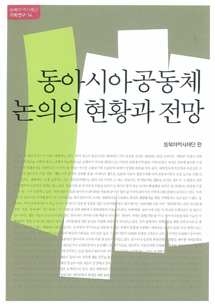
Title: (Northeast Asian History Foundation Special Research Series 34)
Status and Prospect of the Discussion on an East Asian Community
Northeast Asian History Foundation (Ed.)
Northeast Asian History Foundation ㅣ477 pagesㅣ20,000 wonㅣDecember 15, 2009
ISBN 978-89-6187-166-2-93300
East Asia is going through a period of transition in the early 21st century. In the post-Cold War era, East Asia is seeing the rise of China, the strengthening of Russia’s national power, and Japan’s move toward becoming a “normal country.” East Asian countries are moving away from the Cold War paradigm, establishing and dissolving various networks for their respective national interests. With the larger current of globalization, informatization, and democratization, multidimensional networks are replacing nation-states (pursuing national interests) as the main agents of international relations. Against such a backdrop, each Northeast Asian country is seeking to reshape the regional order in order to maximize its respective national interests. This title discusses diverse perceptions of East Asia, issues concerning a communal identity, and measures to overcome nationalism. These are matters often overlooked by the divergent EAC discourses in Korea, China, and Japan. The title aims to set forth the issues regarding EAC discourses, examine the ideologies and values that should be pursued, and seek alternatives for arriving at a shared perception of an East Asian community.
Table of Contents
• Perceptions of East Asia and EAC policies of Korea, China, and Japan /Lee Suk-jong, et al.
Ⅰ. Foreword
• Issues concerning the formation of an EAC identity/Lee Jin-won, et al.
Ⅰ. Foreword
Ⅱ. EAC theories in Korea
Ⅲ. EAC theories in Japan
Ⅳ. Confucian culture and issues concerning an East Asian identity as seen through empirical data
Ⅴ. Feasibility of an East Asian Community as seen through empirical data
Ⅵ. Vision and proposal on the development of an EAC identity
• Pursuit of an East Asian Community and measures to overcome nationalism: Causes and solutions to conflicts in Northeast Asia /Lee Nam-ju, et al.
Ⅰ. Foreword
Ⅱ. Patterns of conflict among the three Northeast Asian nations and their causes
Ⅲ. Expansionary mechanism of conflicts in Northeast Asia and nationalism
Ⅳ. Response measures to conflicts and nationalism in Northeast Asia
Ⅴ. Conclusion
Ⅱ. China
Ⅲ. Japan
Ⅳ. Korea
Ⅴ. Korea’s EAC strategy
