
- Major ActivitiesMajor ActivitiesThe Northeast Asian History
Foundation is the center of
Northeast Asian history research - ResourcesResourcesThe Northeast Asian History
Foundation is the center of
Northeast Asian history research - NewsNewsThe Northeast Asian History
Foundation is the center of
Northeast Asian history research - IntroductionIntroductionThe Northeast Asian History
Foundation is the center of
Northeast Asian history research
-
Screen size
-

- Major Activities
- Resources
- News
- Introduction
- Website Guide
Resources
Publication
- Date 2013.01.25
- Hit 4609
1. The Northeast Asian History Foundation owns the copyright to files located on this site.
2. Unauthorized reproduction and copying in any way or form is prohibited.
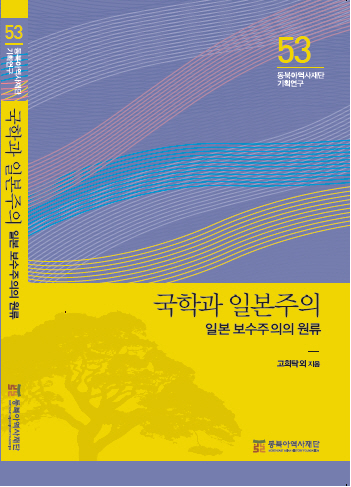
Authors: KOH Hee Tak, et. al.
Northeast Asian History Foundation | 148 mm x 225 mm | 273 pages | KRW 11,000 | published August 10, 2011
ISBN 978-89-6187-253-9 93910
Contents
Foreword
The Conditions and Process of the Birth of ‘Japanism’ / PARK Hong Kyu
Ⅰ. Introduction
Ⅱ. Geopolitical Isolation and De-sin : fication Policy
Ⅲ. The Acceptance and Transformation of Neo-Confucianism, and Frustration
Ⅳ. The Discovery and Spread of the World of Literary Personal Feelings
Ⅴ. The Tokugawa (德川) "Peace" and the Rise of the Emperor System
Ⅵ. Conclusion
The Original Form of Japan's "Kokutai" Nationalism : The Light and Shadow of Motoori Norinaga Kokugaku / KOH Hee Tak
Ⅰ. Introduction
Ⅱ. The Traces of Literary Theory as Anthropology
1. The Confucian Hori Geijan (堀景山) and Literary Theory
2. Theory of Poetry and Anthropology
3. Separation of Will from Psychology
4. The Double Sides of Human "Nature" and the Issue of Tolerance
5. From Special to Universal : From Jinsai to Geijan
Ⅲ. Eternally Unbroken Line of Emperors from the Standpoint of Theory of Subjectivity
1. Songs and Theory of Subjectivity
2. Monopoly of Jinsaigaku (仁齋學)
3. "Elegance" and Emulation
Ⅳ. Imperial Order as Shinto "Nature"
1. The Value of Continuance as "Fact"
2. Changes in the Meaning of the Continued Line of Emperors
3. From Literary Theory to Shinto Theory : From Individual to Order
Ⅴ. Conversion to Imperial Order and the Conception of Japanism
1. From Simplicity to Obedience
2. False vs. True
3. Transformation of "Virtue"-Exclusion of "Wisdom (智)"
4. Voluntary Obedience and the Way of Just Society
Ⅵ. Conclusion
The Cosmology and Japanism of Hirata Atsutane Kokugaku : Focusing on : PARK Kyu Tae
Ⅰ. Introduction
Ⅱ. The Life and Learning of Hirata Atsutane
1. Human and Life
2. Major Works and Ideological Influences
Ⅲ. The Cosmology of Tamanomihasira
1. The Cosmology of Samdaego
2. The Cosmology of Tamanomihasira
Ⅳ. Reverting from Cosmology to Japanism
Ⅴ. Kokugaku Turning into Religion
1. The Theory of Cosmogenesis
2. The Concept of Good and Evil and the Concept of Judgment
3. Formalization of Old Shinto and the Worship of Ancestors
Ⅵ. Turning Myth into History
Ⅶ. Conclusion
A Study on the Japanism of Kokugaku during the Edo Era: LEE Kyu Bae
Ⅰ. Introduction
Ⅱ. Kadano Azumamaro's and Kamono Mabutsi's Japanism
Ⅲ. Motoori Norinaga's Japanism
Ⅳ. Hirata Atsutane's Japanism
Ⅴ. Non-Kokugaku Scholars' Approaches to Japanism
1. Japanism based on "Theory of Time, Place, and Position"
2. Japanism based on "Theory of Water and Soil Geography"
3. Japanism based on "Theory of Nihon Shoki and Kojiki"
Ⅵ. Conclusion: The Fate of Japanism based on Kokugaku
The Establishment of Japanese Folklore as "Shinkokugaku" and the Development of Japanism : Focusing on Yanagita Kunio's Discourse on Shinkokugaku : KIM Sun Hee
Ⅰ. Introduction
Ⅱ. The Establishment of Yanagita Folklore
Ⅲ. Yanagita's Discourse on Shinkokugaku
Ⅳ. Japanese Folklore as "New Kokugaku" or "Shinkokugaku"
Ⅴ. Conclusion
- No Data