
- Major ActivitiesMajor ActivitiesThe Northeast Asian History
Foundation is the center of
Northeast Asian history research - ResourcesResourcesThe Northeast Asian History
Foundation is the center of
Northeast Asian history research - NewsNewsThe Northeast Asian History
Foundation is the center of
Northeast Asian history research - IntroductionIntroductionThe Northeast Asian History
Foundation is the center of
Northeast Asian history research
-
Screen size
-

- Major Activities
- Resources
- News
- Introduction
- Website Guide
Resources
Publication
- Date 2014.01.07
- Hit 5022
1. The Northeast Asian History Foundation owns the copyright to files located on this site.
2. Unauthorized reproduction and copying in any way or form is prohibited.
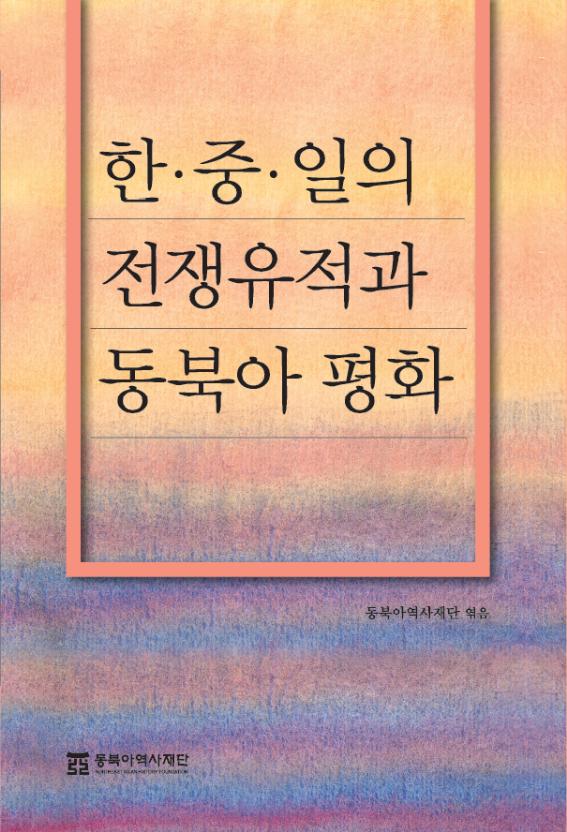
Title: War Sites in Korea, China, and Japan, and Peace in Northeast Asia
Compiled by the Northeast Asian History Foundation
Northeast Asian History Foundation | 148mm x 225mm | 708 pages | KRW 18,000 | December 10, 2010
ISBN 978-89-6187-216-4 93910
Contents
Preface
Comments on the Northeast Asian Peace Belt | DO Jin-soon
1. Raising Issues
2. The Facade - The Memory and Concept of the Sino-Japanese War
3. The Reverse - The Memory about Goryeo-Yuan Alliance
4. Lesson - To Create New Memories
5. Conclusion
Peace and Reconciliation: Education at Resistance-related Memorial Halls in China | Li Zongwen
1. Raising Issues
2. The Status of Resistance-related Memorial Halls in China
3. The Historical View of Resistance-related Memorial Halls in China
4. The Exhibition Principles of Resistance-related Memorial Halls in China
5. The History Education of Resistance-related Memorial Halls in China
6. Conclusion
The Challenges of Preserving War Sites and Establishing Peace in Northeast Asia | Kimizuka Yoshihiko
1. Disappearing War Sites
2. Remaining War Sites and 'War Site Archaeology'
3. War Sites in Northeast Asia - Nodugu Mine
4. The Challenges of Preserving and Studying 'War Sites' - Establishing 'Peace' in Northeast Asia and 'Reconciliation'
The Second Donghak Peasants' War and Suppression, the Japanese Military's Massacre of Peasants | Inoue Katsuo
- Visiting Places Across Shikoku, the Homeland of Soldiers -
1. Introduction
2. The Path of Suppression Forces
3. The Records of the Japanese Legation in Korea
4. War Diary and The Uprise of Korea's Donghak Party
5. On Joseon's 'Punishment for Riots'
6. An Outline of the Suppression of the Donghak Party by the Commander
7. On the Investigation of the Commander of the 19th Infantry Battalion of the Second Reserve
8. On the 19th Infantry Battalion of the Second Reserve
9. On Snider-Enfield
10. Newspaper Articles in Shikoku
11. Uwajima Shimbun
12. Tokushima Nichinichi Shimbun and Kainan Shimbun
13. The Execution of Donghak by Proxy
14. On the Poor Japanese Soldier
15. Improvement - Kainan Shimbun, Toyo Shimbun
16. The Editorials of Kagawa Shinbo
The Preservation of the Sino-Japanese War Sites and the Promotion of Peace in East Asia | Wang Zihe
1. Introduction
2. Sino-Japanese War Sites in Weihai
3. Responsibility to Preserve the Sino-Japanese War Sites
4. Historical Perception and the Role of Museums
5. Proof of Peace Education - Historical Sites and Materials
6. Possibility of Tripartite Cooperation to Protect War Sites
7. Deepening Mutual Understanding by Increasing Exchanges in the Private Sector
8. Prayer for Peace
The Sites and Relics of the Sino-Japanese and Russo-Japanese Wars in Lushun and Peace in Northeast Asia | CHOI Bong-ryong
1. Introduction
2. Lushun's Strategic Location and Historical Memories of the Sino-Japanese and Russo-Japanese Wars
3. The Sites and Relics of the Sino-Japanese War in Lushun and the Opening of the Memorial Facility
4. The Sites and Relics of the Russo-Japanese and War in Lushun and the Opening of the Memorial Facility
5. The Use of War Sites for the Establishment of Peace in Northeast Asia
6. Conclusion
The Sites and Relics of the Sino-Japanese and Russo-Japanese Wars in Incheon and Peace in Northeast Asia | KANG Ok-yeob
1. Incheon in the Modern History of Korea
2. The Sino-Japanese and Russo-Japanese Wars and Incheon
3. The Sites and Relics of the Sino-Japanese and Russo-Japanese Wars in Incheon and Their Use
The 'National Identity' of the Taiwanese through Modern War Sites and Relics | Ju duhran
1. Introduction
2. The War Sites of Modern Taiwan
3. War Relics Existing in Taiwan
4. The Taiwanese becoming 'Subjects of Japanese Empire'
5. Pluralistic 'National Identity'
6. Conclusion
Japan's War of Aggression on Greater Asia and Chiran Special Attack-Atomic Bombing of Nagasaki
1. Introduction
2. The History of Japan's War of Aggression and Colonial Rule - Focusing on Modern Japan's Distorted 'Perception of History'
3. The Bombing of Chongqing and the Atomic Bombing of Nagasaki
4. Chiran Special Attack Unit Base and Korean Members of the Unit
The Status and Significance of the Japanese Military Sites at Jejudo | PARK Chan-shik
1.The Situation of Jejudo Near the End of the Pacific War
2. The Status of Japanese Military Sites at Jejudo
3. The Historical Significance of Japanese Military Sites at Jejudo
4. Introduction to Japanese Military Sites at Jejudo
Building a Bridge to Connect History and Peace | Ju Chengshan
1. Introduction
2. Inheriting the History of the Nanjing Massacre as an Ideal of Peace
3. Nanjing Reborn as the Center of Peace Movement
4. Establishing Peace in Northeast Asia through Lessons Learned from the Nanjing Massacre
Survey of War Sites and Relics in Okinawa: How They Are Preserved and Used | Ikeda Yoshifumi
1. Introduction
2. An Account of the Battle of Okinawa
3. Advocacy of War Site Archeology and War Damage Afterwards
4. Revision of Standards for Designating War Sites and Developments Thereafter in the Okinawa Prefecture
5. Other Actions to Inform about War
6. Conclusion
