- Major ActivitiesMajor ActivitiesThe Northeast Asian History
Foundation is the center of
Northeast Asian history research - ResourcesResourcesThe Northeast Asian History
Foundation is the center of
Northeast Asian history research - NewsNewsThe Northeast Asian History
Foundation is the center of
Northeast Asian history research - IntroductionIntroductionThe Northeast Asian History
Foundation is the center of
Northeast Asian history research
-
Screen size
-
- Major Activities
- Resources
- News
- Introduction
- Website Guide
Activities
- Hit 351
- Securing Previously Unreleased Historical Records Demonstrating
Korea's Sovereignty over Dokdo Immediately after Liberation
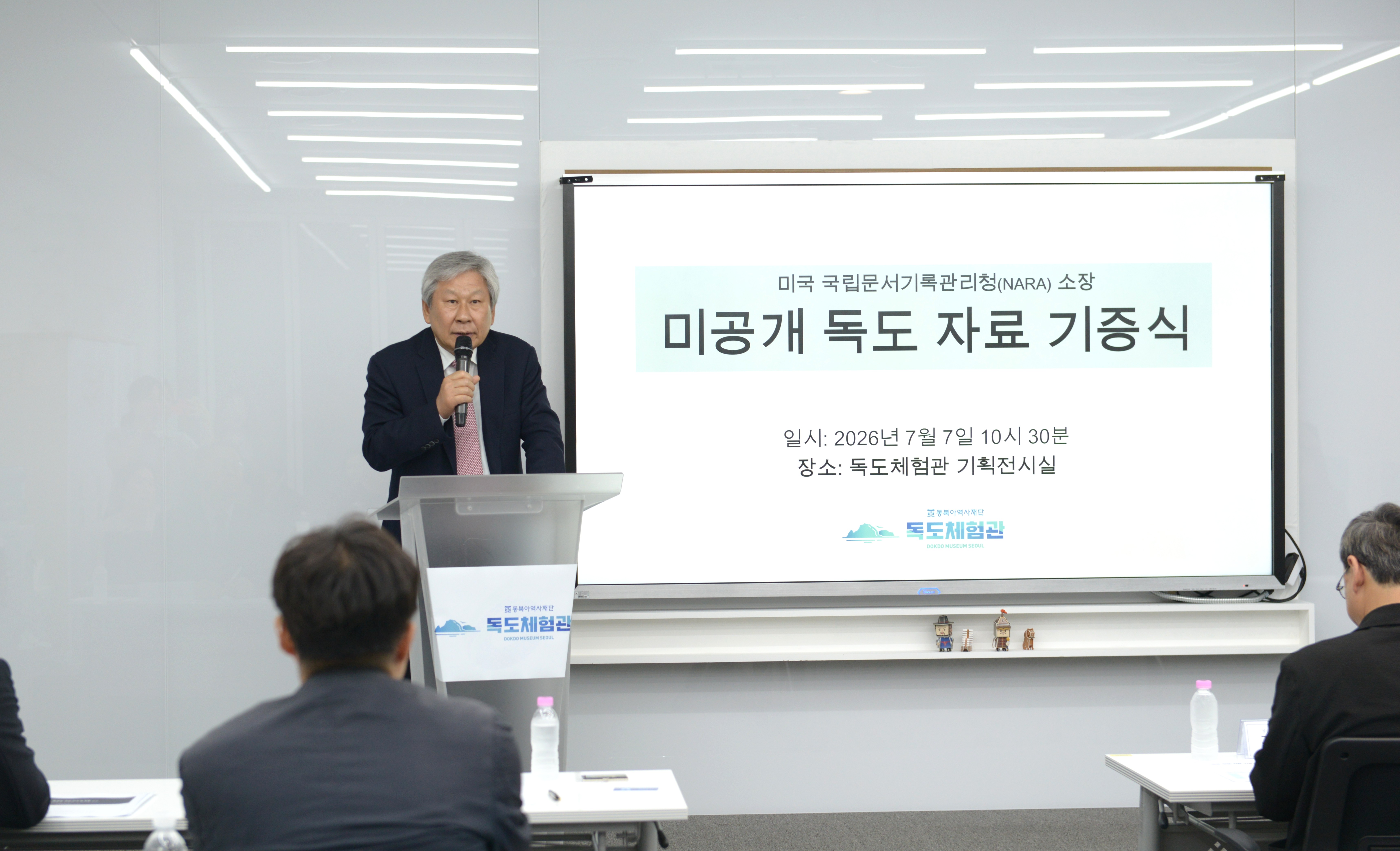
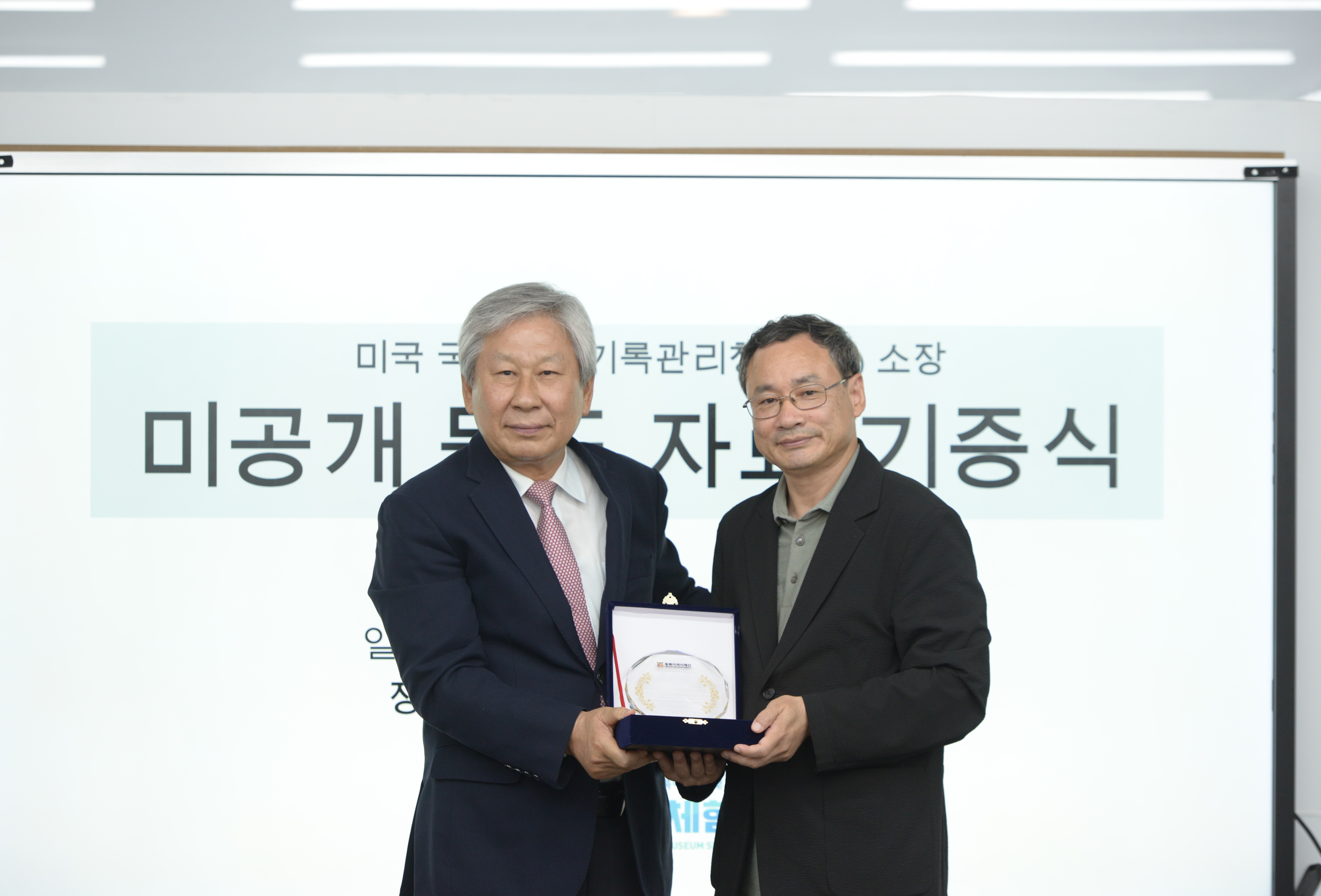
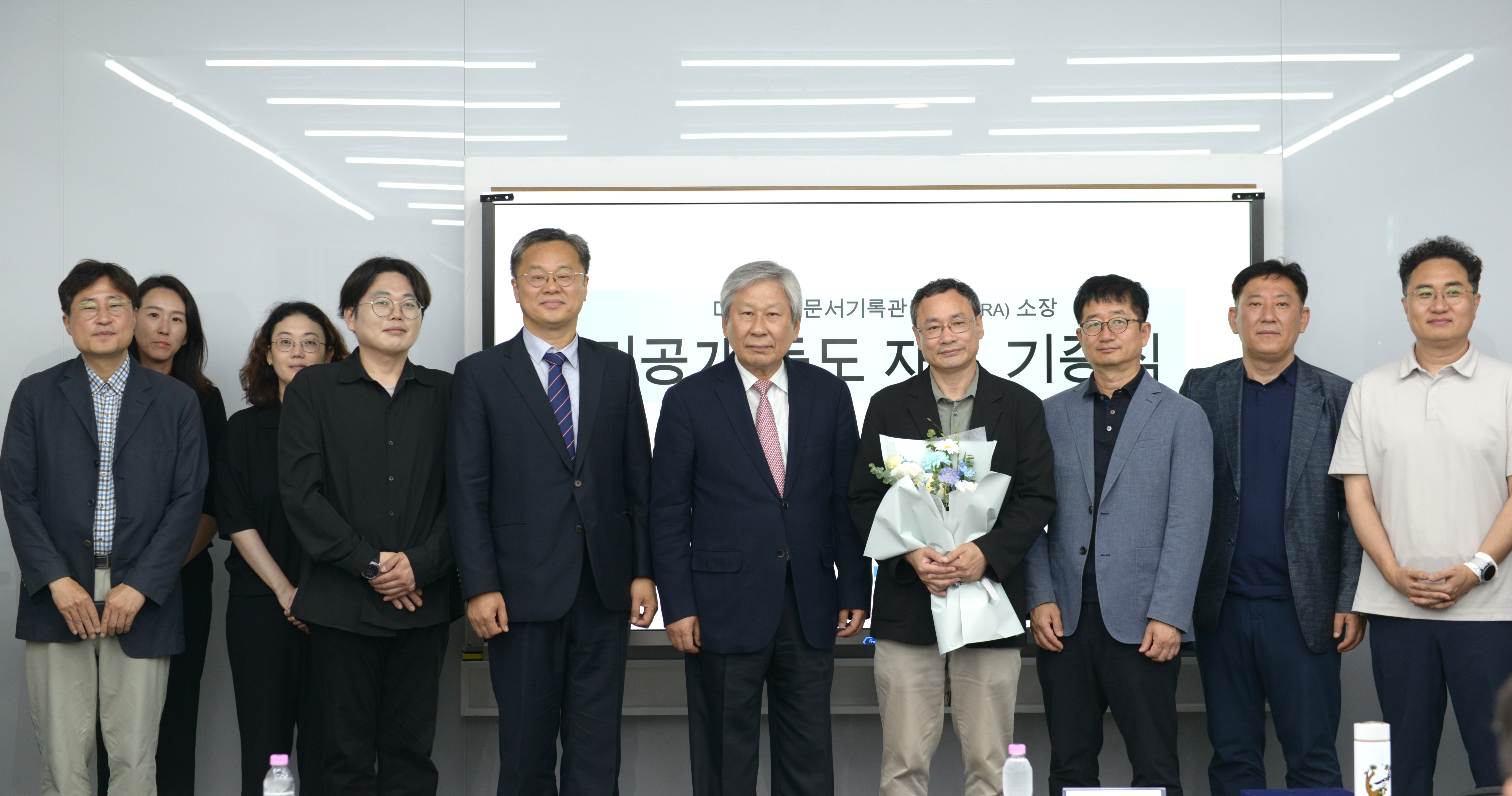
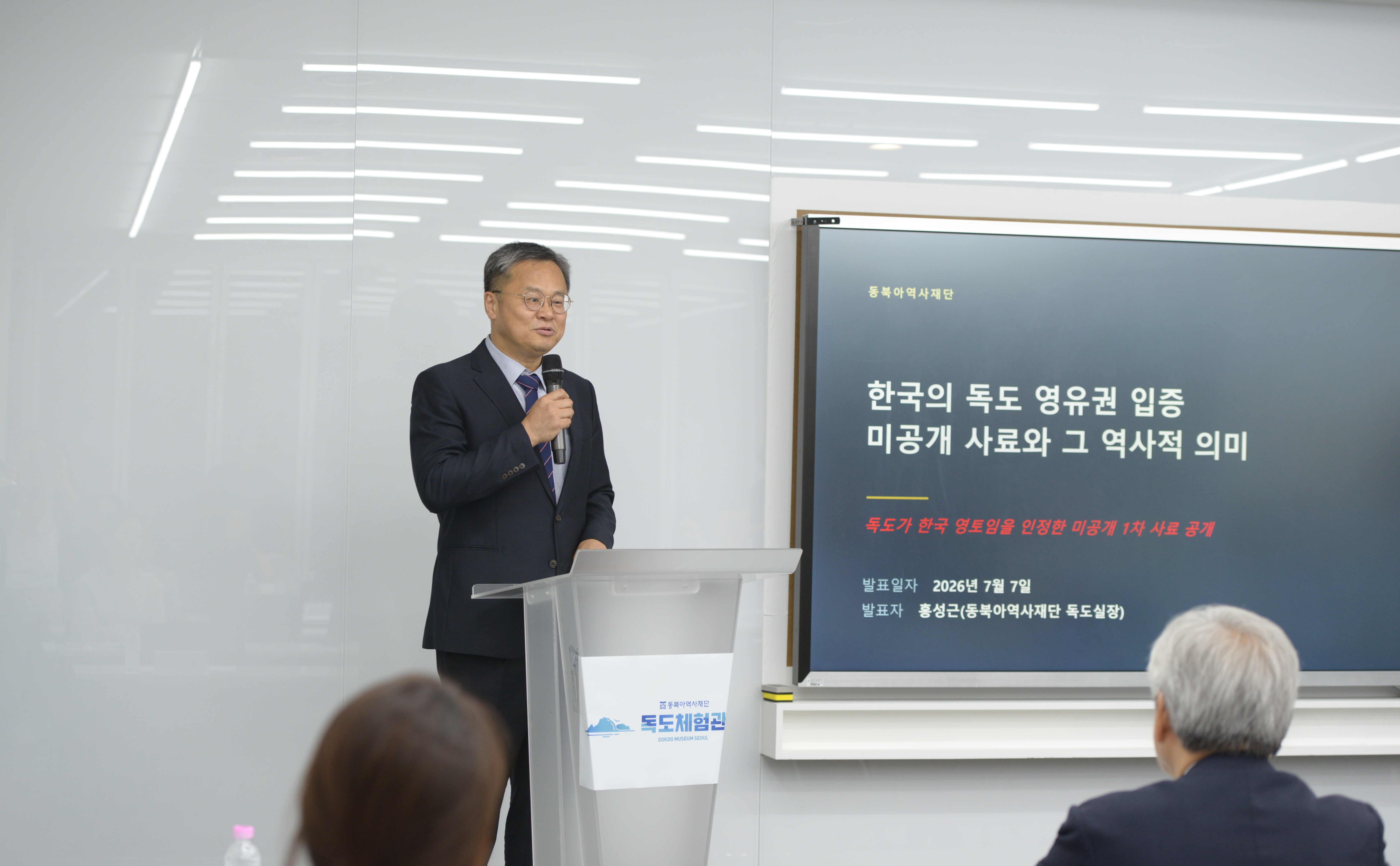
On July 7, the Northeast Asian History Foundation held a donation ceremony at the Dokdo Museum for previously undisclosed Dokdo-related records preserved by the U.S. National Archives and Records Administration (NARA).
The donated materials were collected by Professor Jeon Gap-saeng of the Institute for East Asian Studies at Sungkonghoe University from NARA. They consist of 222 pages of previously unpublished primary sources, including U.S. military investigation reports on the 1948 Dokdo Bombing Incident and documents produced in Korea immediately after liberation concerning Dokdo. Of particular significance are official U.S. military records recognizing Dokdo as Korean territory, as well as documents related to Korea's sovereignty over Dokdo prepared by the Korean government and local administrative authorities shortly after liberation. These materials are regarded as valuable resources for Dokdo research.
During the ceremony, the Foundation presented Professor Jeon Gap-saeng with a plaque of appreciation in recognition of his generous donation. Hong Seong-geun, Director of the Dokdo Research Office, then introduced the historical significance of the newly discovered materials and their academic value in demonstrating Korea's sovereignty over Dokdo. The presentation highlighted key documents, including a Far East Air Forces (FEAF) investigation report stating that, as of September 1947, it had been "definitely established" that Dokdo was "a part of Korea," as well as documents prepared by the Administrator of Ulleungdo concerning Korea's sovereignty over Dokdo.
Through this donation, the Foundation plans to further strengthen the systematic collection and preservation of Dokdo-related materials while actively utilizing them for research and educational purposes.
Chung Yong-sang, Secretary General of the Foundation, stated, "These newly donated records are invaluable historical materials that hold great significance for understanding and studying the modern history of Dokdo. The Foundation will not only preserve them safely but also provide researchers with a valuable foundation for further study while making them widely accessible to the public through exhibitions and educational programs."
- No Data