
- Major ActivitiesMajor ActivitiesThe Northeast Asian History
Foundation is the center of
Northeast Asian history research - ResourcesResourcesThe Northeast Asian History
Foundation is the center of
Northeast Asian history research - NewsNewsThe Northeast Asian History
Foundation is the center of
Northeast Asian history research - IntroductionIntroductionThe Northeast Asian History
Foundation is the center of
Northeast Asian history research
-
Screen size
-

- Major Activities
- Resources
- News
- Introduction
- Website Guide
Resources
Publication
- Date 2010.08.25
- Hit 5195
1. All rights of the contents and the electronic files in the Webpage are reserved for the Northeast Asia History Foundation.
2. No part of the Webpage may be reproduced, stored in retrieval system, or transmitted, in any form or by any means, without the prior permission.
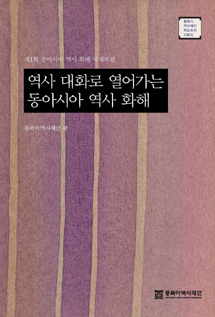
Title: (Northeast Asian History Foundation Conference Proceedings) Historical Reconciliation in East Asia through Historical Dialogue
Northeast Asian History Foundation (Ed.)
Northeast Asian History FoundationㅣNew A5 Editionㅣ455 pagesㅣ15,000 wonㅣFebruary 13, 2009
ISBN 978-89-6187-108-2-93900
The title is a collection of a papers presented at the inaugural international forum on historical reconciliation in East Asia (October 2007, Seoul). This annual forum, co-hosted by the Northeast Asian History Foundation and Korean National Commission for UNESCO, is assessed to be elevating the historical dialogue in East Asia to new heights by promoting discussions that overcome divisions and conflicts. Participants of the forum discuss the possibility of transnational historical studies and share experiences of historical reconciliation related to textbook issues. The forum reaffirms the need for dialogue among historians and the effort to seek alternatives in order to open a future of mutual growth and peaceful coexistence. Unless we overcome the limitations and divisions engendered by self-centered historical perceptions that focus on national histories, there cannot be a historical vision for the future. Thus, the forum is very meaningful in that it encourages a sense of shared responsibility among East Asia’s intellectuals to contribute to opening a bright future for the region.
Table of Contents
• Role of History in Germany’s Foreign Policy of Reconciliation: Principles and Realities – Lily Gardner Feldman
Ⅰ. Foreword
Ⅱ. History as principle
Ⅲ. Actual history: Germany’s relations with France, Israel, Poland, and the Czech Republic
Ⅳ. Return to the past
Ⅴ. Conclusion
• In Search of History Beyond Borders in East Asia : Lessons From Recent Historical Dialogue and the Prosper for East Asian Regional Histories – Mitani Hiroshi
Ⅰ. My experience : Historical dialogue and cooperative research
Ⅱ. Approaches : “to Share common memories” or “to provide common grounds for different memories?”
Ⅲ. Prospects : Toward Various East Asia Histories
Ⅳ. Conclusion
• East Asian Community and Historical Reconciliation in East Asia – Baik Young-seo
Ⅰ. Peace and community building in East Asia
Ⅱ. China''s ''''peaceful rise'''' and the East Asian Community
Ⅲ. Japan, the ''''normal state,'''' and its vision of East Asian Community
Ⅳ. The ''''Era of Northeast Asia'''' and Korean solution for peace
Ⅴ. East Asian identity and reconciliation
• Clash of Memories: Taiwan-China Relations and Japan – Long Yingtai
Ⅰ. Zhishan Park
Ⅱ. Exploitation or act of grace?
Ⅲ. Relations with China
• History Education for Historical Reconciliation: Theoretical Contemplation and Actual Experience from Germany’s Viewpoint – Bodo von Borrie
Ⅰ. Foreword: Case of Europe and common configuration of a European progression
Ⅱ. Effect of history and historical stories
Ⅲ. Four approached to learning history and historical reconciliation
Ⅳ. Summary: Teaching critical, remorseful, and introspective history
• Comparative Study of Korea-Japan Joint History Textbooks – Im Sang-seon
Ⅰ. Foreword
Ⅱ. Publication status of Korea-Japan joint history textbooks
Ⅲ. Comparison of the contents of Korea-Japan joint history textbooks
Ⅳ. Conclusion: Regarding future tasks for joint history textbooks
• Compilation of the Korea-Japan Joint History Textbooks and History Education – Kimura Shigemitsu
Ⅰ. Foreword
Ⅱ. Three points concerning recent history education
Ⅲ. Compilation of Korea-Japan joint history textbooks and its significance
Ⅳ. Compilation of joint textbooks and new history education
• Seeking the Possibility of Historical Reconciliation through Joint Textbooks – Park Hung-hyeon
Ⅰ. Prologue
Ⅱ. Use of joint textbooks as one means of reconciliation
Ⅲ. Unfolding of a class on Okinawa using History to Open the Future
Ⅳ. Holding a class on the Imjin War
Ⅴ. Analysis of student comments on the class
Ⅵ. Epilogue
